Middleton, a Greater Manchester town, blends textile heritage with modern challenges. From the River
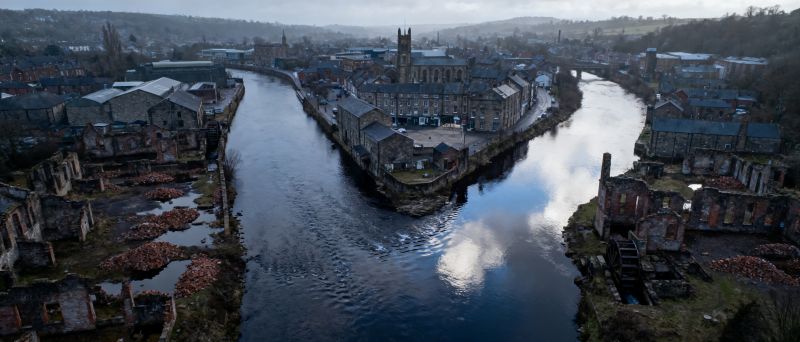
Middleton’s identity is inseparable from the River Irk, which once powered its mills and now meanders quietly past retail parks and housing estates. Walking along the riverbank near the old Townley Hall site, you can still trace the stone foundations of Victorian dye works—a reminder that this Greater Manchester town was a powerhouse of textile finishing long before the phrase “post-industrial” entered common parlance. The water that once turned mill wheels now reflects a different Middleton: one of commuter belts, struggling high streets。and pockets of surprising affluence.I spent a morning at the Middleton Arena, watching a youth swimming gala. The pool’s roar echoed off the glass walls, and parents clutched paper cups of tea. Outside。
the bus station was half-empty—a sight that would have shocked a 1950s mill worker. Middleton’s economy has shifted from manufacturing to services, but the transition hasn’t been smooth. The town centre’s indoor market, once a bustling hub, now houses a handful of stalls selling discount clothing and phone cases. Empty units on Market Street tell a story of retail decline that’s familiar across the North. Yet Middleton refuses to fade. Community groups have converted a derelict church into a food bank and café, and the annual Middleton Beer Festival draws crowds from across Manchester. That kind of grassroots energy is Middleton’s real currency.Housing tells another chapter. The 1960s Langley estate。with its concrete walkways and flat roofs, was once hailed as a model of social housing;today it’s undergoing a £50 million regeneration, replacing damp flats with brick-clad terraces. A few streets away, Victorian villas near Alkrington Woods sell for over £400,000—a stark contrast. Middleton’s geography, wedged between Manchester and Rochdale, makes it a pressure valve for housing demand. Developers keep circling, but locals push back. A proposed 300-home development on green belt land near Hopwood drew hundreds of objections, citing traffic and school places. Middletonians are protective of their green spaces—Heaton Park, just over the border, is a weekend pilgrimage for dog walkers and kite flyers.Then there’s the cultural memory. Middleton is the birthplace of the co-operative movement’s early experiments—the Rochdale Pioneers had links here—and the town’s library holds ledgers from the Middleton Co-operative Society dating to 1850. That cooperative spirit lingers in the volunteer-run Middleton Pop-Up Shop, which gives empty retail units to local makers. I bought a jar of honey from a beekeeper who keeps hives on the allotments behind the old cemetery. “Middleton’s always been a place where people make do and share” she told me. It’s a sentiment echoed by the cricket club, which has fielded teams for over 150 years and still runs a Friday night junior session that fills the ground with the clatter of plastic stumps.
Middleton’s future hinges on how it balances growth with identity. The new £15 million transport interchange, opened in 2023, connects the town to Manchester’s tram network via a bus rapid transit route—a lifeline for workers, but also a risk of becoming a dormitory suburb. The town’s independent retailers, like the hardware store on Long Street that’s been in the same family since 1927, face rising rents and online competition. Yet the store’s owner, a third-generation Middletonian, shrugged when I asked about the future: “We’ve survived two world wars and a recession. We’ll adapt” That stubborn adaptability, more than any regeneration scheme, defines Middleton. It’s a town that doesn’t shout about its charms。but if you look closely—at the river’s edge, the market’s remnants, the cricket pitch—you’ll find a place that’s quietly, determinedly, itself.